A/C Man Heating and Air: Fayetteville Indoor Air Quality and AC Repair
Summer heat in Fayetteville is not a suggestion, it is a fact that rearranges your daily life. Sweat, restless sleep, fading upholstery, and rising electricity bills are all symptoms of a cooling system that is not pulling its weight. I write from years on service calls, standing in crawlspaces and attics, listening to homeowners describe the same steady erosion of comfort. What separates an acceptable system from one that earns confidence is not mystique, it is attention to indoor air quality and a practical approach to AC repair. A/C Man Heating and Air has been a name I’ve seen families and property managers turn to when they need both clear advice and durable work. This article explains why indoor air quality matters in Fayetteville, how AC Repair in Fayetteville addresses it, and what realistic steps you can expect if you call A/C Man Heating and Air.
Why indoor air quality matters in Fayetteville Fayetteville summers run hot and humid, and humidity changes how air carries heat, dust, allergens, and even viruses. When relative humidity stays above 60 percent indoors, you begin to notice musty smells, mold staining on window sills, and a clammy feel that makes 78 degrees feel a lot warmer. High humidity also reduces the efficiency of an air conditioner because the system must remove moisture as well as heat. That increases runtime, elevates electricity use, and accelerates wear on components.
Poor indoor air quality shows up in several ways that are easy to miss early on. People assume sneezing and dry eyes are seasonal allergies, not a failing return filter or a dirty evaporator coil. A sagging insulation mat in an attic or blocked crawlspace vent can create pockets of warm air that breed mold spores. A furnace or air handler that is not sealed tightly can pull attic air into the ductwork and distribute contaminants through the house. Those are solvable problems if identified before they escalate.
A real example: I once worked in an older Fayetteville bungalow where the owners had replaced the AC condenser three years earlier but left the ductwork untouched. They complained of musty smells and a persistent cough in the mornings. Inspection revealed torn duct seams in the attic and a heavily soiled evaporator coil. After sealing the ducts and cleaning the coil, relative humidity indoors dropped three to five percentage points and the cough symptoms eased. Their monthly energy bill dropped by about 8 percent. AC Repair in Fayetteville is rarely only about new parts, it is about diagnosing the full system.
Common indoor air quality contributors and how they relate to AC repair Air conditioning systems are centerpieces of home air management. Here are common contributors to poor indoor air quality and how AC repair work addresses them.
Clogged filters. Filters capture dust, pollen, and pet dander. When they restrict airflow, the system runs longer, droplets form on coils and encourage microbial growth. Replacing filters on a regular schedule is the simplest, most cost-effective step. A/C Man Heating and Air typically checks filters as a first step during service calls and will recommend MERV levels appropriate to your home.
Dirty evaporator or condenser coils. Coils exchange heat. Dirt reduces transfer efficiency, forcing the compressor to work harder. During an AC Repair in Fayetteville visit, technicians will inspect and clean coils when needed. Cleaning can recover several percentage points of efficiency and reduce run times.
Leaky ductwork. Leaks introduce contaminated attic or crawlspace air and reduce the effective capacity of the system. Duct sealing, using mastic or foil tape at major seams, is part of many repair scopes. Sealing also raises the fraction of conditioned air that reaches living spaces, which improves comfort and lowers energy use.
Improper refrigerant charge. Too much or too little refrigerant affects cooling capacity and can damage the compressor. Technicians measure pressures and use manufacturer specifications to set charge during an AC Repair in Fayetteville.
Poor drainage and condensate issues. Standing water in the drain pan or blocked condensate lines fosters mold growth. Clearing drains and, where appropriate, installing secondary pan switches are common remedial steps.
Indoor sources that compound system issues. Chemical cleaners, certain building materials, and household smoking worsen air quality regardless of AC condition. During service calls, technicians often advise on source control measures in addition to mechanical fixes.
How A/C Man Heating and Air approaches a service call A service call that ends with a sticker price without understanding the home rarely satisfies a homeowner. A/C Man Heating and Air follows a diagnostic-first routine that produces fewer surprises.
First, a directed interview. The technician asks when symptoms started, what rooms are worst, any recent renovations, and patterns in the thermostat schedule. Small details matter. If symptoms spike when the dishwasher runs, humidity or venting could be involved. If they flare only in the evenings, duct balancing or return placement may be the issue.
Second, targeted measurement. Temperature differentials across the evaporator, static pressure in the ducts, refrigerant pressures, airflow readings where possible, and condensate conditions are all part of the toolkit. These measurements distinguish a low refrigerant charge from a failing compressor or a blocked coil.
Third, visible inspection. Coils, drain pans, blower wheels, and plenums are visually inspected. Duct seams are probed. Attics and crawlspaces are checked for insulation, pests, and evidence of moisture. Often small fixes discovered here save larger expenses later.
Fourth, a prioritized plan. Rather than pressuring for a large replacement, the technician outlines options: immediate repairs, efficient upgrades, and deferred items with clear consequences. For example, an old compressor might still be serviceable, but the tech will explain the expected remaining life and total cost of future failures so the homeowner can choose.
When replacement is appropriate Replacement becomes the most economical choice when repair costs exceed roughly 40 percent of a new system’s remaining useful life value, or when the system suffers repeated failures. Age matters. Many split-system condensers last 10 to 15 years, and components like compressors and capacitors tend to fail toward the end of that span. If you call A/C Man Heating and Air with a 12-year-old system that has had three major repairs in two years, replacement will be the pragmatic recommendation.
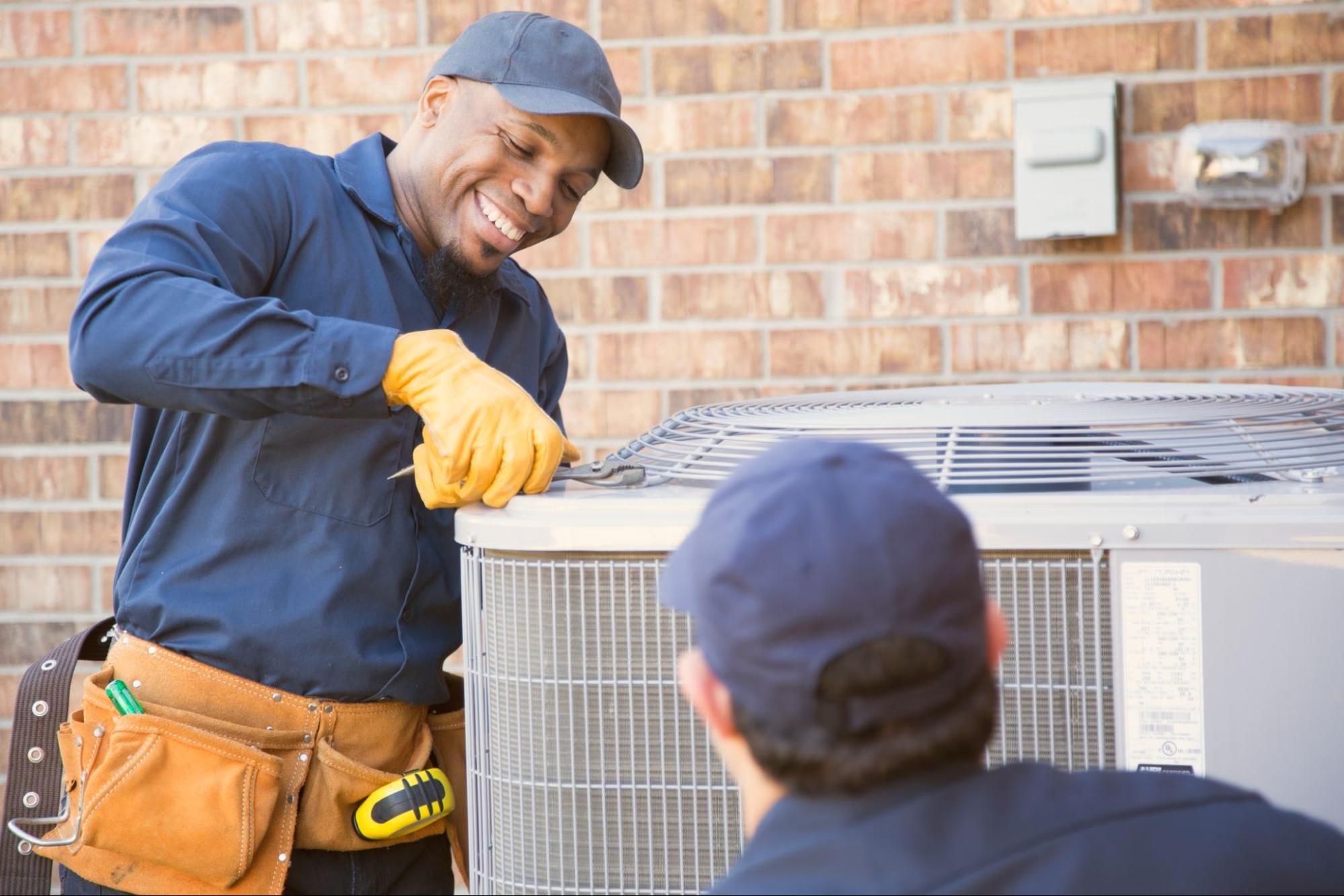
Selecting a replacement system should be done for the whole house, not just the smallest condenser that hits a price target. Right-sizing the system using manual J load calculations reduces short-cycling and humidity problems. Oversized units cool quickly but do not remove moisture effectively, leaving a clammy feeling even though the thermostat reports desired temperature. A/C Man Heating and Air emphasizes proper sizing and duct assessment to avoid common pitfalls.
Simple steps homeowners can take now A few interventions deliver disproportionate benefits. The following list keeps items to five for clarity and can be completed without major service calls.
- Replace disposable filters every one to three months; use a MERV rating suited for your household and HVAC.
- Clear the outdoor unit of debris and maintain two feet of clearance; a clean condenser runs cooler.
- Check condensate drains monthly for blockages; a steady trickle indicates proper flow.
- Seal obvious duct seams with mastic and ensure attic/crawlspace access panels are tight to reduce infiltration.
- Use a programmable thermostat and set a modest setback for empty-house periods to reduce runtime and wear.
How these simple steps reduce the need for frequent AC Repair in Fayetteville is straightforward. Better filtration reduces coil fouling, proper drainage prevents microbial growth, and sealed ducts stop the system from conditioning unwanted air. The electrician I worked with on older rentals used to tell landlords, lower tenant calls by 30 percent through disciplined filter replacement and seasonal coil checks. That kind of prevention saves money.
Trade-offs and real-world judgment There is rarely a single correct path. For households on tight budgets, targeted repairs that restore functionality now may be the right move while planning a replacement later. For those who prioritize indoor air quality because of allergies, investing in higher-MERV filters, UV coil treatments, or a dedicated whole-house dehumidifier makes sense.
Higher-MERV filters trap more particles but also increase static pressure. If your blower motor or ductwork cannot handle the added resistance, airflow drops and the system loses efficiency. The technician will recommend maximum MERV ratings that preserve adequate airflow for your specific blower design. Similarly, whole-house filtration systems add upfront cost and maintenance but can reduce dust in the home by a noticeable margin. Consider the trade-off between monthly filter replacement expense and fewer dusting cycles in the house.
Edge cases technicians encounter There are several patterns that complicate diagnosis. One is intermittent compressor short-cycling that only occurs under high outdoor temperatures, which points to a failing run capacitor or a marginally charged system. Another is rooms that stay warm because of poor return placement, not because the condenser is undersized. In multi-level homes, it is common to find undersized returns on the upper floor, causing the air handler to starve while the downstairs vents push cool air.
I once serviced a townhouse where the tenant complained the third floor never cooled. The condenser was 4 tons and appeared adequate. Measurements revealed that the return grille for the third floor was tiny and separated by a closed door, so the air handler was drawing cooler lower-floor air through under-door gaps rather than circulating the warm upstairs air. Rebalancing and moving the return solved the complaint without replacing the condenser. Those are the sorts of practical fixes A/C Man Heating and Air brings to an AC Repair in Fayetteville.
When to call professionals If you see steady water leaking from the indoor unit, hear repeated clicking followed by no start, notice electrical burning smells, or experience refrigerant hissing, call for professional service immediately. These symptoms indicate safety issues or damage that will quickly worsen. For seasonal tune-ups, schedule service in spring before peak heat. A pre-season inspection catches refrigerant leaks, capacitor health, and airflow problems long before they become emergencies.
What to expect from A/C Man Heating and Air A reliable technician arrives on time, with tools and parts to handle typical repairs, communicates clearly about what they find, and documents recommended repairs with options and expected lifespans. Estimates should be transparent about labor, parts, and any warranty on work. When replacement is necessary, a clear explanation of equipment sizing, efficiency ratings, and expected energy savings should be provided. A/C Man Heating and Air has built trust locally by offering that level of transparency and by standing behind their work with warranties and follow-through.
Final perspective on value and health Indoor air quality and dependable cooling are investments in health, sleep, and the longevity of your home. Fayetteville’s climate amplifies both the need and the payoff. Thoughtful AC Repair in Fayetteville is not about quick patchwork. It is about diagnosing the full system, prioritizing repairs that offer the best return, and communicating trade-offs. Whether you are dealing with a stubborn humidity problem, rising energy bills, or a unit that cycles erratically, start with a measured inspection. Simple preventive actions reduce emergency calls. When you engage a pro, insist on measurements, clear documentation, and options that reflect both immediate needs and longer-term value. A/C Man Heating and Air embodies that pragmatic approach, combining on-the-ground experience with the practical fixes and upgrades that AC maintenance in Fayetteville actually improve indoor air quality and comfort.
A/C Man Heating and Air
1318 Fort Bragg Rd, Fayetteville, NC 28305
+1 (910) 797-4287
[email protected]
Website: https://fayettevillehvac.com/